
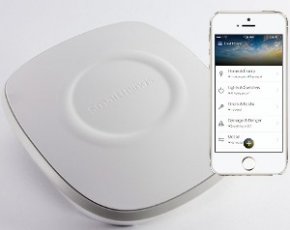
 There are a lot of smart things in this review. Sadly, I’m not just one of these. When it comes to this test I happened to be probably the dumbest thing in the space.
I’ve setup some wise residence hubs (such as this one and also this one), programmed my own Control4 system (significantly), and confused countless universal learning remotes, and so I decided to offer myself a challenge with this specific report about a system–i needed to observe how fast I could have it setup and operating.
SmartThings provides unique type of add-ons you can also utilize suitable third-party devices like Kwikset smart hair, Philips Hue lights or Sonos wireless speakers (BTW–use of third-party devices like Hue however needs the first device’s hub or portal, therefore be sure you have actually a lot of harbors on your own router). The company consistently add even more unit makers into the set of services and products it really works with.
So, back to my setup. Starting up the SmartThings hub started off effortlessly. We plugged it into my router, established the app, entered the unique ID quantity that included the system and filled in more individual information. Then I got cocky. In a rush to have it done, I didn’t take note of the password I’d just comprised (Rule no. 1: don’t forget your property automation code). That little oversight returned to haunt me whenever I wished to add the application to my Android os tablet.
Following, I neglected to correctly look at the clear directions–the directions that were in fact so easy i must say i didn’t need certainly to look at them at all. Unfortuitously i need to have had one eye sealed, thus I skipped step one and went straight to second step. The effect usually I spent 10 wasted moments opening the rear of a motion sensor and repeatedly pushed a pairing switch for a product that had currently immediately paired it self. (Rule #2: don’t underestimate the power of user error).
Next, things went pretty well. As well as the movement sensor, SmartThings sent me personally some door/window contact sensors, and an outlet adaptor allowing you to connect to a lamp, all of these paired up with the machine easily. In addition had two presence sensors. Those tend to be small products that fit on a keychain and can be configured to make certain actions happen considering their particular presence in the house. As an example, once the system detects the existence sensor features remaining the home it may turn off all connected lights. For a test we put one on my dog’s collar and configured (with an intelligent App called “The Flasher) a light to flash as he left the garden.
 The SmartThings presence sensor.
As soon as you’ve got your entire devices synced using hub, you’re planning want to do something with them. In the SmartThings phone or tablet software you can easily configure products to trigger activities. Like, I configured a door sensor to trigger a light to show on whenever door is established. Regrettably if the home was closed once again the light turned-back down. It took only a little tweaking to fix that. Within a section regarding the software there’s an accumulation of “SmartApps” that are additional activities you can add. One called “Notify Me with regards to Opens” could be used to deliver a push notice towards phone whenever a particular sensor is exposed. That could be a beneficial one to use in your booze closet or beer refrigerator when you have dubious teens in the house. SmartApps get lots fancier than that. Some are more for fun than anything else, such as the “Undead early-warning” software (SmartThings does not provide a sensor which informs the difference between a zombie and an ordinary boring individual).
 Home protection is amongst the main regions of interest for devices such as this, and SmartThings can be set up for standard protection functions. You could add notifications for when numerous detectors are triggered, add an ear-piercing alarm and configure a camera to snap a photo of an intruder. I arranged a motion sensor in the storage and programmed it to send alerts with regards to detected motion. For a while this is useful in permitting myself understand that my spouse had get back (I usually have headphones on and can’t notice the garage door). Then for three nights in a row I’d get movement alerts around 3AM. Having seen most of the Paranormal films I immediately thought I had spirits. Starting an wireless camera inside garage unveiled your ghost had been simply a curtain becoming blown by wind because I'd kept a window available (possibly i ought to have put a contact sensor thereon window).
Anyway, most of the devices we connected worked as in the pipeline. The true technique of a system like this is in the app, especially in just how easy it is to create activies and turn on devices. The main display, called the Dashboard, provides you with an at-a-glance view of every little thing in your system. It's going to let you know if doors are closed, the windows open, the lights on, or ghosts (or curtains) relocating your garage. The items see demonstrates to you all of the devices. With regards to the unit, some may be triggered (like a light switch) or configured (like a motion sensor) by pushing the switch of this certain unit.
The app is comprehensive, because it allows numerous activities become configured. Should this be very first experience with a good home system, navigating the user interface will need some being employed to. The device doesn’t have specifically comprehensive imprinted directions, so it’s pretty very easy to forget how you set up an action or mode if you would like go-back and change it. Conversely, there’s actually a support feature constructed into the software that includes good directions (you get to this section through the Dashboard). Inside the assistance area you’ll find a number of “How to” entries and also a live text chat location to connect with a support individual.
So how does SmartThings equate to similar products? Pretty well. The big number of “Smart Apps” can help you deeply customize your body. The large variety can also seem a little daunting if you are new to your whole procedure. The Lowe’s Iris system, as an example, tends to make development (or personalizing) slightly simpler; nevertheless a number of the Iris’ development choices need a monthly cost of $10. With SmartThings you only pay for the products. There’s no service charge for now. Actually, it’s the level why these Smart Apps go that basically provides SmartThings its energy. There’s a great deal of imagination in these choices, and they’ll likely give you a few ideas on how to use your system you would never have looked at on your own.
IT'S INTERESTING
-
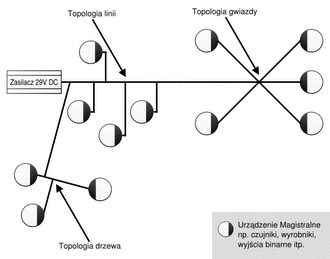 KNX is a standardized (EN 50090, ISO/IEC 14543), OSI-based network communications protocol for intelligent buildings. KNX is the successor to, and convergence of, three previous standards: the European Home Systems Protocol (EHS), BatiBUS, and the European...
- In home automation systems and robotics, a flower robot is a simple electromechanical device with the appearance of a common flower, with components such as stem and leaves. First developed by Berufsbildende Schule 1 Kaiserslautern in 2006 and later by Carnegie...
Share this Post
latest post
-
 Consumer Reports Electronics October 17, 2026
 -
 Used Home Appliance Warehouse September 27, 2026
 -
 Home Depot Black Friday Appliance deals September 7, 2026
 -
 Home automation Systems Reviews August 18, 2026
 -
 Electronics Consumer Show July 29, 2026
 -
 Home automation system Cost July 9, 2026
 -
 Genesis Home Appliances June 19, 2026
 -
 Home Depot appliances financing May 30, 2026
 -
 Berlin Consumer Electronics Show May 10, 2026
porular posts
-
 Home automation Ottawa November 30, 2016
 -
 Consumer and Electronics Show October 16, 2016
 -
 Small Spaces Kitchen Appliances September 6, 2016
 -
 Raspberry Pi Home automation June 28, 2016
 -
 IFA Consumer Electronics Show December 20, 2016
 -
 When is Consumer Electronics Show September 16, 2016